October 30, 2026 · 6-min read
D&D 5e Grappling Rules: How to Grapple, Escape, and Shove
Someone just grabbed the wizard, and now the whole table is flipping through the rulebook. Here is the short version.
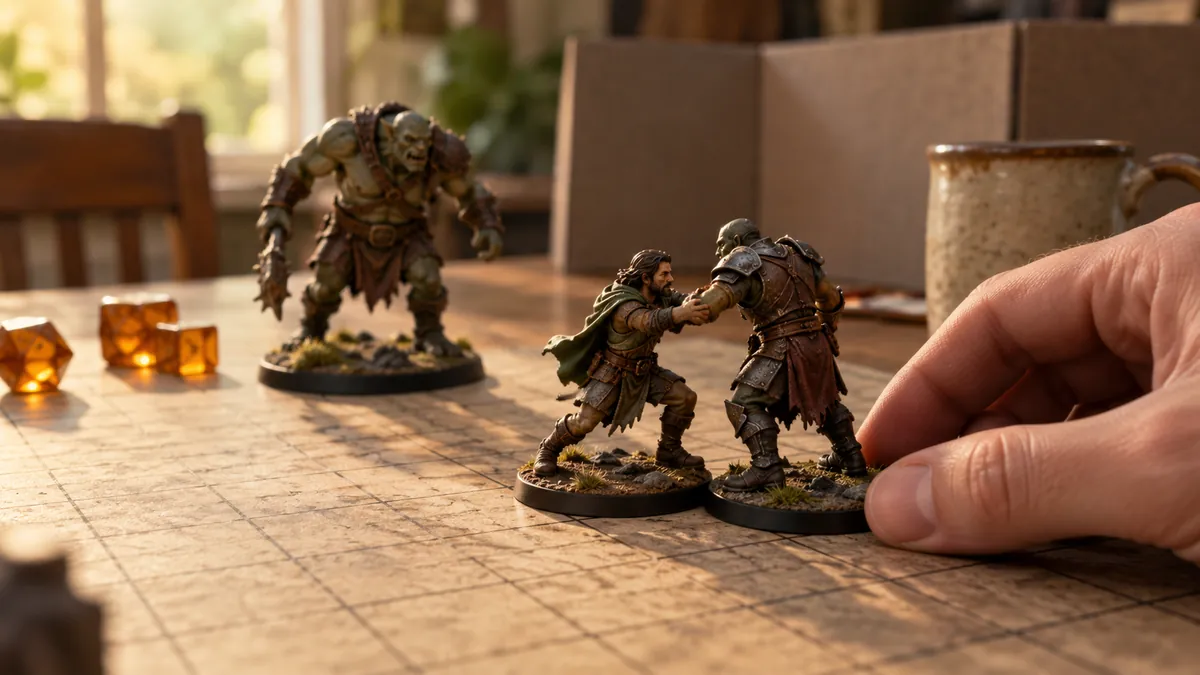
The D&D 5e grappling rules come down to one contest. You use one of your attacks to make a Strength (Athletics) check against the target's Strength (Athletics) or Dexterity (Acrobatics), their choice. If you win, the target is grappled and its speed becomes 0.
Shoving works the same way, except a win knocks the target prone or pushes it 5 feet away. Here is the full breakdown, with the details that usually cause arguments at the table.
Parchment & Dice is not affiliated with Wizards of the Coast. This post covers rules from the SRD 5.1.
How do I grapple a creature in 5e?
Grappling is a special melee attack. It replaces one of the attacks you make when you take the Attack action, so a character with a single attack spends their whole action on it.
Here is the step-by-step:
- Check the target's size. It can be no more than one size larger than you.
- Check your hands. You need at least one free hand to seize the target.
- Make sure the target is within your reach. For most characters that means adjacent.
- Roll a Strength (Athletics) check. The target rolls Strength (Athletics) or Dexterity (Acrobatics), whichever they choose.
- Compare totals. If you win, the target has the grappled condition. If you lose, nothing happens and your attack is spent.
The defender picks whichever skill is better for them, so a nimble rogue will usually roll Acrobatics against a burly fighter. DMs can use the same logic for monsters. Check the stat block for skill bonuses, or just use the ability modifier.
What does the grappled condition actually do?
Less than most people expect. A grappled creature has a speed of 0 and can't benefit from any bonus to its speed. That's it.
- It can still attack, cast spells, and use items.
- It has no disadvantage on attacks.
- Attackers don't get advantage against it.
- It can still be moved by effects that don't rely on its own speed.
The grapple ends if the grappler is incapacitated. It also ends if an effect removes the grappled creature from the grappler's reach, like a spell that hurls it across the room. For a full rundown of other conditions, see our guide to D&D 5e conditions explained.
How do I escape a grapple?
A grappled creature uses its action to attempt escape. It makes a Strength (Athletics) or Dexterity (Acrobatics) check contested by the grappler's Strength (Athletics) check.
- Win: the grapple ends and the creature can move normally again.
- Lose: it stays grappled, and its action is gone.
Many monsters with a grab attack use a fixed escape DC in their stat block instead of a contest. If you want to learn where to find those numbers, check out how to read a D&D stat block.
Other ways out exist too. A creature that teleports, or one that gets forced out of the grappler's reach, is free without rolling.
Can I move while grappling someone?
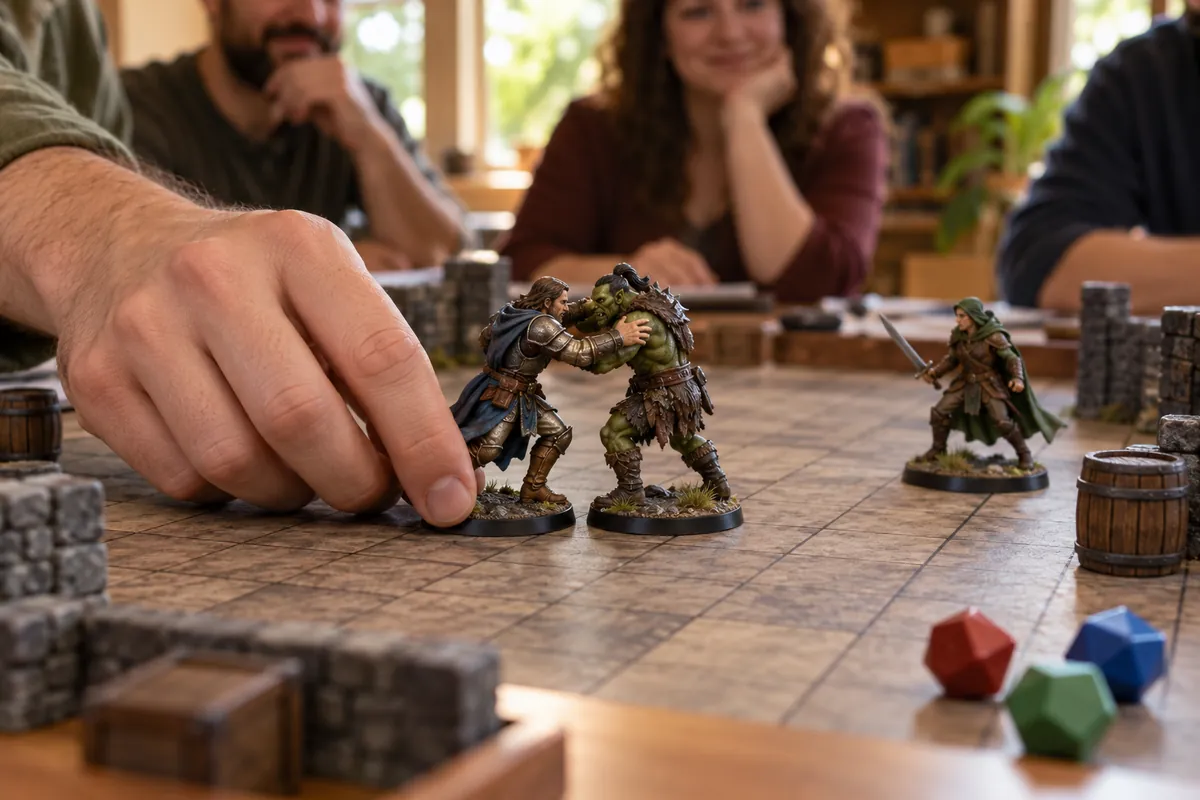
Yes. You can drag or carry a creature you're grappling, but your speed is halved while you do. The exception is when the target is two or more sizes smaller than you, in which case there's no penalty.
So a Medium fighter hauling a Medium bandit moves at half speed. A Large ogre carrying a Small halfling moves at full speed, because the halfling is two sizes smaller.
Remember that the grappler's speed isn't touched by the grapple itself. The slowdown only applies if you choose to move the target with you.
How do I shove a creature in 5e?
Shoving is another special melee attack that replaces one attack. The rules mirror grappling.
- The target must be no more than one size larger than you.
- Make a Strength (Athletics) check.
- The target contests with Strength (Athletics) or Dexterity (Acrobatics).
- If you win, choose one: knock the target prone, or push it 5 feet away from you.
Prone matters. A prone creature has disadvantage on its own attack rolls. Melee attacks against it have advantage if the attacker is within 5 feet, and ranged attacks against it have disadvantage. Standing up costs half of the creature's movement.
Pushing is handy for getting a foe off a ledge, out of a doorway, or away from a squishy ally.
What's the difference between grapple and shove?
| Grapple | Shove | |
|---|---|---|
| Action cost | Replaces one attack | Replaces one attack |
| Size limit | Up to one size larger | Up to one size larger |
| Your check | Strength (Athletics) | Strength (Athletics) |
| Target's check | Athletics or Acrobatics | Athletics or Acrobatics |
| Result | Grappled, speed 0 | Prone, or pushed 5 ft |
| Lasts | Until escape or broken | Prone until they stand |
The big difference is duration. A grapple lasts until someone breaks it, while a shove is a one-time effect.
Does the size limit work both ways?
No, it only restricts the target being bigger. You can grapple or shove anything your size or smaller with no extra rules. Against something one size larger, the contest still works. Against something two or more sizes larger, you can't do it at all.
A few quick examples:
- A Medium barbarian can grapple a Large bear.
- A Medium barbarian can't grapple a Huge giant.
- A Small rogue can shove a Medium guard, but not a Large ogre... unless the DM allows it as a creative stunt.
That last line is a DM call, not a rule. If a player has a clever plan, you can rule it as an improvised action with a high DC rather than saying no.
How do I combine grappling and shoving?
This is the classic martial move. If you have Extra Attack, you can grapple with your first attack and shove with your second. A grappled, prone creature has no speed to run with, and your allies get advantage on melee attacks against it.
A few things to keep in mind as the DM:
- Standing up from prone costs half a creature's movement, and a grappled creature's speed is 0. Decide how you want to rule that interaction and stay consistent.
- A grappling character still needs to deal with the rest of the battlefield, since other enemies aren't affected.
- Monsters can do this to players too, so use it sparingly. Being held in place for a whole fight isn't fun if the player can't do anything about it.
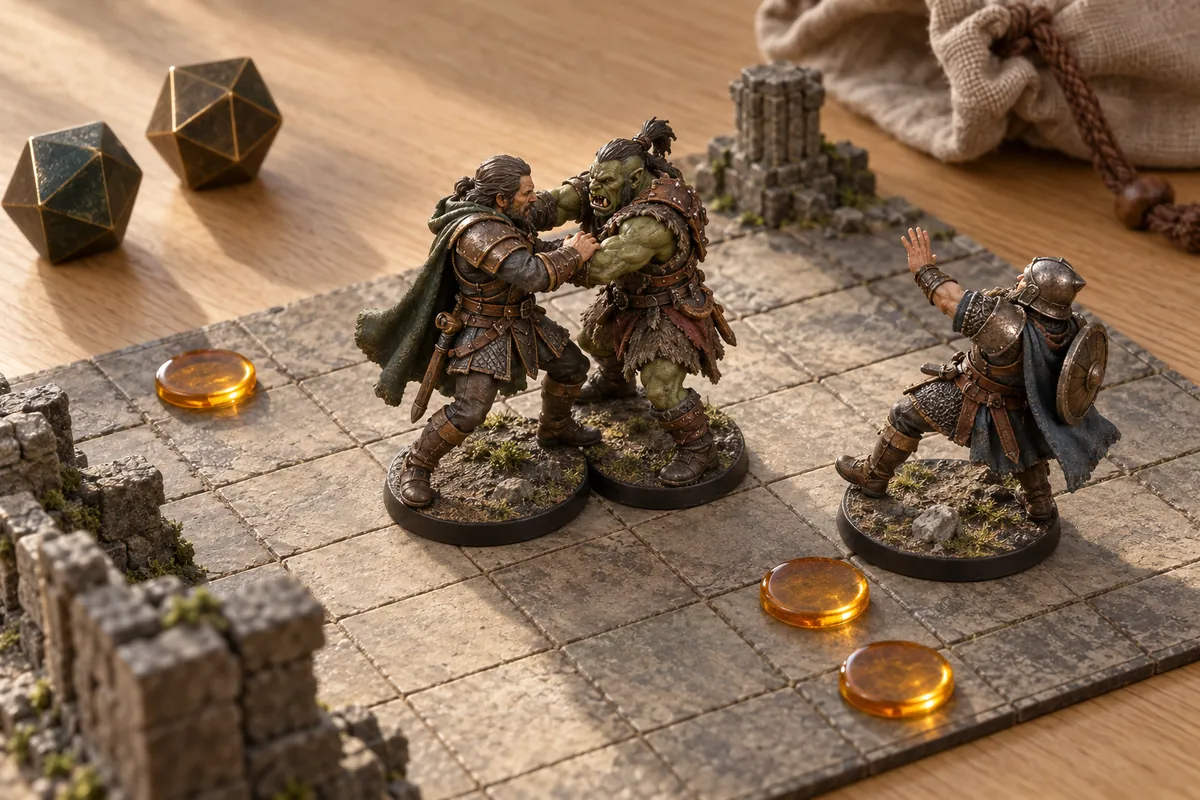
How do I keep grapple rulings quick at the table?
Grappling stalls games because it mixes conditions, contests, and size checks. A few habits help:
- Announce the check type. "Athletics versus your choice of Athletics or Acrobatics" saves a round of questions.
- Write down who's grappling whom. A quick note on the initiative tracker or a spare token works.
- Decide on free-hand questions early. The rules say you need a free hand to seize, so settle whether holding a shield or weapon counts before it comes up.
- Don't re-litigate. Make a ruling, note it, and move on. For more tips on pacing, see speeding up combat.
If your table likes a visual reminder, the DnD Conditions Cheat Sheet is a printable reference poster that lists what each condition does, grappled and prone included. It sits nicely on a DM screen or game room wall. You can also browse everything else in the Parchment & Dice shop.
Quick recap
- Grapple and shove each replace one attack.
- Targets can be no more than one size larger than you.
- Both use Strength (Athletics) against the target's Athletics or Acrobatics.
- Grappled means speed 0, nothing more.
- Escaping takes an action and a contested check.
- Moving a grappled creature halves your speed unless it's two or more sizes smaller.
Once everyone knows those six lines, grapples stop being a rules pause and become just another fun option in combat.
Frequently asked questions
- Can you grapple a creature that is more than one size larger than you?
- No. The target can be no more than one size category larger than you, so a Medium character can grapple a Large creature but not a Huge one. Smaller targets are always fair game.
- Does being grappled give disadvantage on attack rolls?
- No. The grappled condition only sets the creature's speed to 0 and stops it from benefiting from any bonus to its speed. A grappled creature can still attack, cast spells, and take other actions normally.
- Does the grappler have to use an action to keep holding someone?
- No. Once the grapple succeeds, it lasts until the target escapes, the grappler becomes incapacitated, or something forces the two apart. The grappler only spends an attack to start it.
- Can a grappled creature teleport or be pulled out of a grapple?
- Yes. The grapple ends if an effect removes the grappled creature from the grappler's reach, such as a teleport or a spell that hurls it away. Another creature can also help by forcing the two apart.
- Can I grapple and shove in the same turn?
- Yes, if you have enough attacks. Grappling and shoving each replace one attack, so a character with Extra Attack can grapple with the first and shove with the second.
- grappling
- combat rules
- conditions
- dm help
- 5e rules
Related reading
- D&D 5e Opportunity Attacks: When They Trigger and How to Avoid ThemLearn how dnd 5e opportunity attacks work: what triggers them, what counts as leaving reach, and how Disengage and teleporting avoid them.
- How to Build a D&D Encounter with a Mimic Players Won't See ComingGet dnd mimic encounter ideas that actually surprise your table, from disguise choices to pacing tricks that keep players from metagaming the chest.
- D&D 5e Conditions Explained: What Each One Actually DoesD&D 5e conditions explained plainly: what blinded, frightened, restrained, and every other status actually does at the table, with quick fixes for ending them.